Solitaire - Relax Card Game
- 4.7
- Rating
- 10.00K
- Installs
- Free
- Price
 Analysis by App-foxy
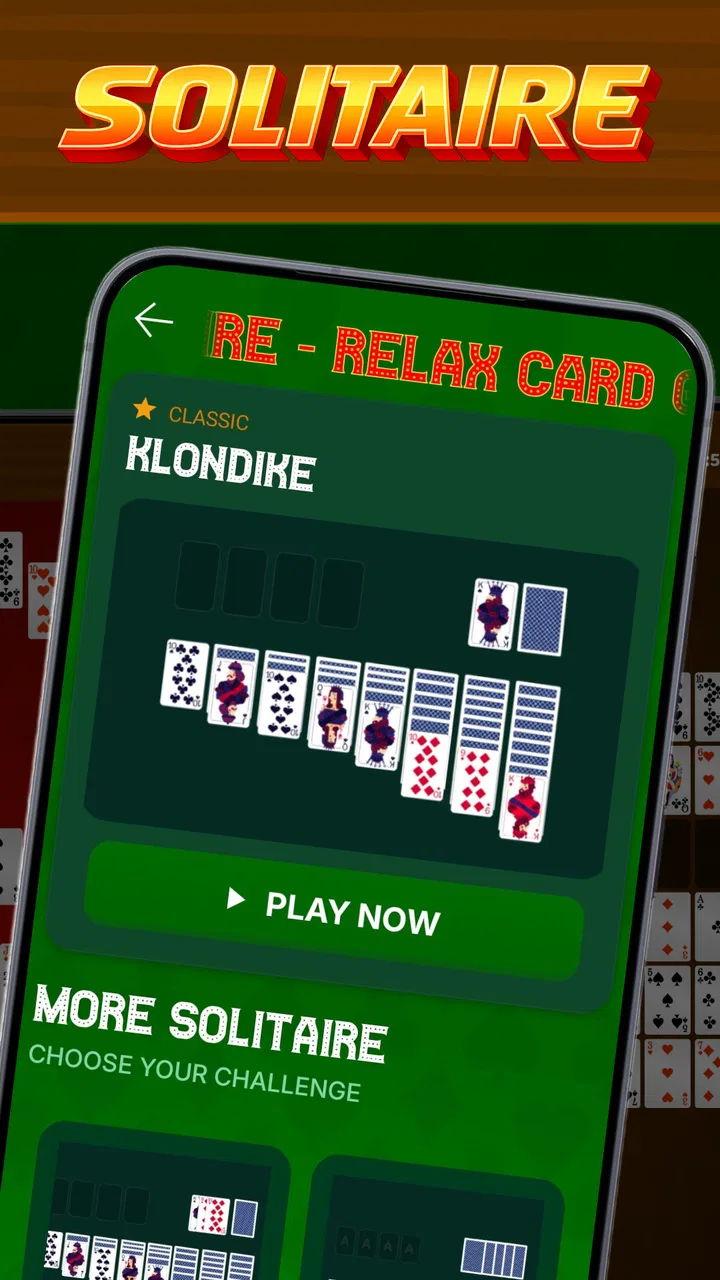
I spent time with Solitaire - Relax Card Game as a quiet, traditional card game rather than a large collection of modes. That distinction matters. Its appeal is the familiar solitaire format, a clean flow from one deal to the next, and a presentation built around attractive card themes instead of noisy competition. If you want something easy to open during a short break, it makes a sensible first impression.
At the same time, this is not the kind of game I would recommend to someone looking for deep progression, a story, online opponents, or a constant stream of new objectives. My experience was more about the quality of the basic solitaire loop: can I read the cards comfortably, make decisions without fighting the controls, and enjoy a few minutes without feeling pushed into a complicated system? In those areas, Izanagi Production has focused on a straightforward card experience.
How the first games establish a rhythm
The early goal is refreshingly simple: clear the tableau by making sensible moves and building the foundation piles in order. There is no need to learn a long rule set before playing. Anyone familiar with classic solitaire can begin almost immediately, while a newcomer can understand the purpose by watching the layout and trying legal moves.
You May Also Like

 AccuWeather: Weather Radar
AccuWeather Review: A Quick, Clear Forecast for Everyday Decisions
For everyday plans, the best forecast is the one you can understand quickly. AccuWeather makes rain timing, radar, and local conditions easy to act on, with a few trade-offs.

 Hill Climb Racing
Why Hill Climb Racing Still Turns Crashes Into One More Run
A tiny car, a bumpy hill and one more upgrade: Hill Climb Racing keeps resurfacing because its simple chaos makes every near-miss feel personal.

 AliExpress - Shopping App
AliExpress Makes Global Shopping Feel Personal, but Shoppers Bear the Risk
AliExpress turns a global marketplace into a pocket-sized discovery engine. Its reach is useful, its shopping loop compelling, and its trade-offs easy to miss.

 Lords Mobile: Kingdom Wars
Lords Mobile Is a Kingdom-Building Routine, Not a Quick Match
A case-by-case verdict on the building, battles, device demands, and social commitments that make Lords Mobile rewarding for some players and exhausting for others.

 PDF Scanner app - TapScanner
TapScanner Makes Paperwork Easier to Capture, Check, and Share
TapScanner makes scanning with a phone feel less like a rescue operation and more like a dependable step in getting work done. Its capture tools are useful, though not flawless.

 Block Blast!
 Shows How Much a Puzzle Game Can Leave Out
A quiet grid game shows why puzzle players increasingly value instant clarity, repeatable skill and low-pressure play—and where the genre still needs to catch up.
More From Our News Desk
View All News


That simplicity gives the opening sessions a useful sense of momentum. I can start a game while waiting for a bus, pause mentally when something else needs my attention, and return to the same kind of decision-making without having to remember a complicated campaign. The game’s free availability also makes it easy to try without turning the first session into a purchase decision.
The card themes are one of the more noticeable touches. They do not change the rules, but they give the familiar layout a little more personality. I found that useful over repeated sessions because the visual presentation does not feel quite as plain as a bare-bones solitaire board. The best theme for me was the one that kept suits and ranks distinct at a glance; decoration is welcome, but readability has to remain the priority in a card game.
My practical advice is to choose a theme for contrast rather than choosing only by appearance. A beautiful background is less valuable if red and black suits blend together or if the card faces become tiring to scan. Solitaire depends on quick visual comparisons, especially when several possible moves are open, so a comfortable layout will help more than a flashy one.
What counts as progress in a simple solitaire game
There is no need to force a large progression structure onto this experience. The main progress signal is personal: I see more of the board cleared, recognize useful moves sooner, and finish deals with fewer hesitant taps. That kind of improvement is subtle, but it is exactly what keeps classic solitaire playable after the novelty of the first game has passed.
I also like the way each deal creates a small, self-contained objective. I am not working toward a distant character upgrade or a map marker. I am trying to solve the layout in front of me. That makes the game suitable for short sessions because the immediate goal is always visible, even when I do not have time for a long play period.
Players who need explicit rewards may find this less satisfying. The verified version is 1.0.6, and my expectations for it are therefore centered on a polished core card game rather than a broad live-service structure. If your motivation comes from collecting items, unlocking stages, or comparing a detailed record against other players, this particular style of solitaire may feel too restrained.
For me, the lack of a busy reward loop is partly a strength. It keeps the attention on the cards and reduces the temptation to play merely to claim another notification or bonus. The trade-off is clear: the game offers a calm routine, not a long-term achievement chase.
Where the difficulty comes from
The difficulty curve in a traditional solitaire game is shaped less by enemy behavior and more by the quality of the decisions available in each layout. Early moves can look obvious, but a careless choice may block an important card later. I found that the game rewards patience more than speed: before moving a card simply because the move is legal, I try to consider whether it exposes a hidden card or preserves flexibility elsewhere.
That creates a gentle form of challenge without requiring complicated rules. A beginner can play by following visible opportunities, while a more experienced player can think about sequencing, empty spaces, and whether to reveal a card now or preserve a longer chain. The same basic layout can therefore feel different depending on how carefully I approach it.
One useful habit is to avoid treating every available move as equally good. When I have a choice, I first look for the action that reveals a concealed card or opens a vacant column. Moving a complete-looking sequence may feel productive, but exposing new information is often more valuable than making the board look tidy. This is the sort of small decision that gives the game more depth than its minimal presentation suggests.
Another tip is to use the foundation piles thoughtfully instead of sending every eligible card upward immediately. Advancing a card can be correct, but sometimes keeping a low card available helps build a tableau sequence. I found that pausing for a quick scan before committing made losses feel more understandable and wins feel more earned.
The difficulty is not perfectly controlled in the way I would expect from a campaign with carefully staged levels. A deal can feel open and forgiving, while another can become restrictive because of its arrangement. That variation is part of solitaire’s character, but it also means players seeking a smooth, predictable climb from easy to hard should look elsewhere.
How the pacing supports short and long sessions
The pacing works best when I treat the game as a flexible break activity. A single deal can provide a defined task without demanding the time commitment of a larger mobile game. I can play while having coffee, use it to reset between work tasks, or settle into several deals when I want a more extended quiet session.
The absence of a dramatic narrative or escalating action keeps the emotional temperature low. That is exactly why I would suggest it to someone who wants a relaxing card game before bed or during a commute. It is less suitable for a player who needs constant surprise, rapid reactions, or a strong sense that every session is changing the game world.
The title’s pacing also depends on how much thought I bring to each board. Rushing through obvious moves can make it feel repetitive, while taking a few seconds to plan gives each deal a clearer shape. I appreciate that the game leaves room for this personal tempo. It does not need to turn solitaire into an arcade challenge to remain engaging.
There is, however, a retention trade-off. A calm loop can become familiar quickly if the visual themes are the only noticeable variation. Without a deeper sequence of goals, some players may finish a few sessions and feel they have seen the full idea. I would not call that a flaw in the basic design, but it is an important expectation to set before downloading.
Who will enjoy the card themes and who may not
The visual customization gives the game a more personal feel than a single fixed deck. I like having a choice of atmosphere because solitaire is often played repeatedly, and even a small presentation change can make the board feel fresher. The themes are most useful when they support legibility rather than compete with it.
People with tired eyes should pay particular attention to how quickly they can distinguish ranks and suits. In my sessions, comfort mattered more than decoration. If a theme looks attractive in a screenshot but slows down recognition during play, it is not the right choice for a longer session. I would start with the clearest option and only then experiment with the more decorative designs.
Because the content rating is Everyone, the game is positioned as an accessible choice for a broad audience. That fits the familiar rules and non-aggressive tone. I would still recommend that younger or less experienced players begin slowly, since the challenge comes from understanding card order and planning rather than from a tutorial-heavy structure.
How it compares with familiar alternatives
Compared with a standard solitaire app that focuses only on a plain deck and a minimal board, this game’s most obvious advantage is presentation. The card themes make repeated play feel less stark, while the core rules remain recognizable. If you already know solitaire and want a slightly more inviting visual wrapper, this is the comparison in which it makes the strongest case.
Compared with larger card suites that bundle solitaire with several variants, daily challenges, statistics, social features, or elaborate reward tracks, this title feels deliberately narrower. That can be a benefit for someone who wants to open one game and play classic solitaire without sorting through menus. It is a disadvantage for anyone who wants variety inside a single download.
I would also choose a more feature-heavy alternative if detailed performance tracking is central to my enjoyment. Players who like studying win patterns, chasing formal streaks, or competing with friends may find this experience too quiet. On the other hand, those same systems can make another solitaire app feel cluttered, especially when I only want a quick, uncomplicated deal.
The developer, Izanagi Production, has kept the identity focused enough that the game is easy to understand from the first launch. Its average rating is 4.6 from around a hundred ratings, and the install count is over ten thousand. Those figures suggest a modest but positive reception, though I would still judge the game by whether its restrained format matches my own habits rather than by popularity alone.
Small decisions that improve the experience
I recommend beginning each deal with a scan instead of immediately tapping the first legal move. Look for cards that can uncover hidden information, identify columns that might be emptied, and notice whether a move will trap a useful rank. This takes only a few seconds but makes the game feel more strategic and reduces the sense that the result is entirely random.
When I am playing during a short break, I use a simpler approach: prioritize moves that clearly open the board, then reassess before touching the foundation piles. This keeps the session moving without turning it into rushed play. When I have more time, I think further ahead and try to preserve multiple options rather than building one sequence as quickly as possible.
Theme selection is another practical workflow. I change the design when the board starts to feel visually stale, but I return to the clearest theme when I am solving a difficult layout. That separates decoration from performance and helps me avoid blaming the deal when the real problem is that the cards are harder to read.
I also find it useful to stop after a frustrating deal instead of immediately replaying in a hurry. A short pause often makes the next session more enjoyable. Since the game’s appeal is relaxation rather than pressure, forcing repeated attempts can work against the reason to open it in the first place.
What the game does not try to be
This is not a competitive card battler, and I would not install it expecting opponents, elaborate deck construction, or a campaign. Its card-game identity is much more traditional. The challenge comes from solving the arrangement, not from mastering a collection of characters, powers, or changing battle rules.
It also does not appear designed around a strong sense of unlock-driven retention. The visual themes add variety, but they do not transform the underlying objective. That makes the experience easier to recommend to people who dislike aggressive engagement tactics, while making it harder to recommend to players who need a steady stream of new milestones.
That limitation is worth considering before installation. If I want a dependable solitaire board with a softer presentation, the focused design is appropriate. If I want a game that continually expands, surprises, and rewards me for returning every day, I would be better served by a broader alternative in the same card category.
Device fit, accessibility, and everyday use
The minimum operating-system requirement is Android 9, so the game is aimed at relatively modern Android devices rather than very old phones. I would check that compatibility before planning to use it on an older handset. For most people with a recent enough Android phone or tablet, the more important practical question will be whether the card faces remain comfortable at the chosen screen size.
On a phone, the compact board suits quick sessions, but smaller displays can make careful planning less comfortable than on a tablet. I prefer a larger screen when I am trying to compare several columns at once. A phone remains perfectly reasonable for casual play, especially when the goal is one short deal rather than a long analytical session.
The game is free, which lowers the barrier to testing it for a few minutes. I would approach that as an invitation to evaluate the actual rhythm: play several deals, try more than one card theme, and decide whether the straightforward structure holds my attention. Free access is useful here because solitaire is a personal taste; some players enjoy the calm repetition, while others need more variety almost immediately.
My verdict on its long-term appeal
After spending time with it, I see the strongest reason to keep Solitaire - Relax Card Game installed as convenience. It is a focused, familiar card game with a pleasant visual layer, a low-pressure pace, and enough decision-making to reward careful play. The early goal is clear, the progress is visible through the board itself, and the difficulty comes from planning rather than complicated rules.
The weaker side is long-term progression. The game does not give me a compelling reason to chase a large sequence of unlocks, and its retention value depends heavily on whether I already enjoy classic solitaire. The themes help, but they cannot replace new modes or a deeper challenge structure for players who want constant development.
I would recommend it to someone who wants a free solitaire game for quiet breaks, especially if familiar rules and attractive card designs matter more than social competition. I would skip it in favor of a broader card suite if I needed multiple variants, extensive records, formal daily goals, or a more substantial reward system.
My final take is simple: choose it for a calm, readable solitaire routine, not for a content-heavy progression game. Within that narrower purpose, Izanagi Production has made a sensible choice by keeping the focus on the board, the cards, and the small satisfaction of finding the right sequence. Its best moments come when I slow down, preserve my options, and watch a difficult layout gradually open.
FAQs for Solitaire - Relax Card Game
01What is Solitaire - Relax Card Game and how does it differ from other card games?
Solitaire - Relax Card Game is a classic card game app designed for users seeking a relaxing and enjoyable experience. Unlike other card games that may involve complex strategies or multiplayer elements, this app focuses on providing a solitary, calming experience with intuitive controls and soothing visuals. It’s perfect for unwinding during a break or at the end of a long day.
02Is Solitaire - Relax Card Game free to download and play?
Yes, Solitaire - Relax Card Game is free to download and play on both Android and iOS platforms. The app may include optional in-app purchases, such as ad-free experiences or special themes, but the core gameplay is accessible without any cost. This makes it an attractive option for casual gamers looking for a no-cost way to enjoy classic solitaire.
03Does the app require an internet connection to play?
No, Solitaire - Relax Card Game does not require an internet connection to play. This feature allows users to enjoy the game offline, making it ideal for travel or situations where connectivity is limited. However, an internet connection might be necessary for downloading updates or accessing certain in-app purchases.
04What features does Solitaire - Relax Card Game offer to enhance the user experience?
Solitaire - Relax Card Game offers several features to enhance the user experience, including customizable backgrounds, card designs, and relaxing music options. There are also daily challenges and hints to aid players if they get stuck. The app’s user-friendly interface ensures that both beginners and seasoned solitaire players can navigate the game with ease.
05Are there any ads in Solitaire - Relax Card Game, and how can they be managed?
Yes, the app does include ads to support its free-to-play model. However, users can manage their ad experience by opting for in-app purchases that remove ads entirely. This option allows players to enjoy an uninterrupted gaming experience, which can be especially appealing to those who find ads disruptive to their relaxation time.
Pros
- User-friendly interface for easy navigation.
- Variety of card designs to customize play.
- Offline mode available for travel or no Wi-Fi.
- Daily challenges keep gameplay fresh.
- Light on battery usage
- extends playtime.
Cons
- Ads can be intrusive
- breaking game flow.
- Limited hints available without purchase.
- No multiplayer mode for social play.
- In-app purchases can be quite costly.
- Occasional bugs disrupt card movements.

Solitaire - Relax Card Game
Gallery